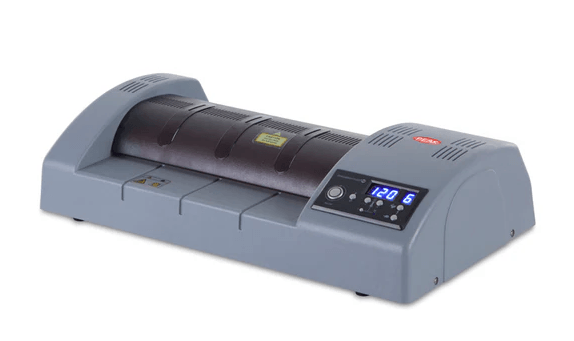
In today’s fast-growing printing, packaging, and publishing industries, product presentation and durability are extremely important. Customers expect high-quality printed materials that not only look attractive but also last longer under different environmental conditions. One of the key technologies that helps achieve this is the paper laminator machine.
This machine is widely used in commercial printing houses, offices, packaging units, and industrial production facilities. It improves the strength, appearance, and protection of paper-based products by applying a thin protective layer over them.
What is a Paper Laminator Machine?
A paper laminator machine is a device designed to apply a protective film or coating over paper materials. This process enhances the paper’s durability, resistance, and visual appeal.
The lamination process involves bonding a plastic film or special coating onto paper using heat, pressure, or adhesive methods. Once laminated, the paper becomes more resistant to moisture, dust, tearing, and fading.
Paper laminator machines are commonly used for documents, posters, brochures, book covers, packaging sheets, and marketing materials.
Importance of Paper Laminator Machine in Modern Industry
The demand for high-quality printed materials has increased significantly in recent years. Businesses rely on professional presentation to attract customers and build brand identity. A paper laminator machine plays a key role in achieving this goal.
Key reasons for its importance include:
- Improves durability of paper products
- Enhances visual appearance and finish
- Protects against moisture and dust
- Increases product lifespan
- Provides professional-quality output
- Reduces damage during handling and storage
These benefits make it essential in printing and packaging industries.
How a Paper Laminator Machine Works
The working process of a paper laminator machine is simple but highly effective.
Feeding Process
Paper sheets or rolls are fed into the machine through an input tray or roller system.
Film Application
A thin layer of lamination film is applied to the surface of the paper.
Heat or Pressure Bonding
Depending on the machine type, heat or pressure is used to bond the film permanently to the paper.
See also: Technology Trends in Software Engineering
Cooling or Stabilization
The laminated paper is cooled to ensure strong adhesion and smooth finishing.
Output Collection
The finished laminated sheets are collected or stacked for further use.
This process ensures consistent quality and smooth results.
Types of Paper Laminator Machines
Different industries use different types of paper laminator machines based on their requirements.
Hot Laminator Machines
These machines use heat and pressure to bond the film to paper. They are widely used for professional printing jobs.
Cold Laminator Machines
Cold laminators use pressure-sensitive adhesives instead of heat, making them suitable for heat-sensitive materials.
Manual Laminator Machines
These are simple machines used for small-scale or office use where production volume is low.
Automatic Laminator Machines
Designed for high-speed production, these machines handle large volumes with minimal human intervention.
Roll-to-Roll Laminator Machines
These are industrial machines used for continuous lamination of paper rolls in large-scale production.
Each type serves different operational needs.
Key Features of Modern Paper Laminator Machines
Modern paper laminator machines come with advanced features that improve efficiency and output quality.
High-Speed Operation
Modern machines can process large volumes of paper quickly and efficiently.
Precision Temperature Control
Ensures accurate heat levels for perfect lamination results.
Smooth Feeding System
Prevents paper jams and ensures smooth operation.
Energy Efficiency
Designed to consume less power while maintaining high performance.
User-Friendly Controls
Digital panels and simple interfaces make operation easy.
Multi-Size Compatibility
Supports different paper sizes and thickness levels.
Applications of Paper Laminator Machine
Paper laminator machines are used across various industries and sectors.
Printing Industry
Used for laminating posters, brochures, business cards, magazines, and catalogs.
Packaging Industry
Helps create durable packaging materials with improved appearance.
Educational Sector
Used for protecting charts, educational materials, and certificates.
Corporate Offices
Used for laminating important documents, reports, and presentations.
Advertising Industry
Used for banners, display materials, and promotional prints.
This wide range of applications makes it an essential machine in modern industries.
Advantages of Paper Laminator Machine
Businesses and individuals benefit greatly from using paper laminator machines.
Enhanced Durability
Protects paper from water, dust, and physical damage.
Professional Appearance
Gives a glossy or matte finish that improves visual appeal.
Cost-Effective Protection
Reduces the need for frequent reprinting or replacement.
Improved Handling
Laminated paper is easier to handle and store.
Long-Term Preservation
Keeps important documents safe for years.
Versatility
Suitable for various paper sizes and applications.
Technological Advancements in Paper Laminator Machines
Modern machines are equipped with advanced technologies to improve performance and reliability.
Key innovations include:
- Digital temperature control systems
- Automatic feeding mechanisms
- Smart pressure adjustment
- Energy-saving heating systems
- Anti-jam technology
- Touchscreen operation panels
These features make modern laminators more efficient and user-friendly.
Role in Modern Printing and Packaging Industry
The paper laminator machine plays a crucial role in enhancing the quality of printed materials. As competition increases in the printing industry, businesses need to deliver high-quality and durable products to attract customers.
Lamination helps achieve:
- Better product presentation
- Increased customer satisfaction
- Stronger brand identity
- Higher market value of printed materials
This makes it an important part of modern production workflows.
Environmental Considerations
Modern paper laminator machines are designed with environmental efficiency in mind.
Eco-friendly features include:
- Reduced energy consumption
- Support for recyclable films
- Low waste production systems
- Cleaner operational processes
These improvements help reduce environmental impact while maintaining productivity.
Challenges of Paper Laminator Machines
Despite many advantages, there are some challenges associated with paper laminator machines:
- Initial purchase cost
- Maintenance requirements
- Need for skilled operation
- Limited compatibility in basic models
However, these challenges are outweighed by long-term benefits.
Future of Paper Laminator Machines
The future of paper laminator machines is expected to focus on automation, efficiency, and sustainability.
Future developments may include:
- Fully automated production systems
- AI-based quality control
- Faster lamination speeds
- Eco-friendly material compatibility
- Smart remote monitoring systems
These advancements will further improve efficiency and reduce operational costs.
Conclusion
The paper laminator machine is an essential tool in modern printing, packaging, and office environments. It improves durability, enhances appearance, and provides long-lasting protection for paper-based materials.
With continuous technological advancements and growing demand for high-quality printed products, paper laminator machines will continue to play a vital role in industrial and commercial applications. Businesses that invest in advanced lamination technology benefit from improved efficiency, better product quality, and long-term cost savings.