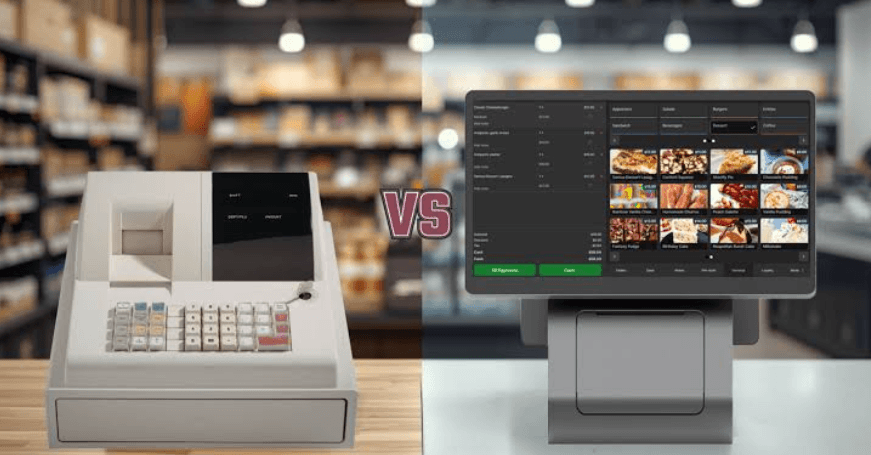
Card payment has reduced the amount of cash moving through most retail businesses, and it has not eliminated it. Convenience formats, hospitality, market traders, and a large number of independent shops still handle meaningful cash volumes, and cash remains the medium where losses are easiest to create and hardest to trace.
The reason is structural. A card transaction leaves a record on both sides. A cash transaction leaves a record only if someone enters it, and the person entering it is the person handling the money.
Loss Prevention in a cash environment therefore depends on procedure rather than on technology alone, though the technology determines how visible the procedure is and how quickly discrepancies surface.
Where Cash Losses Actually Occur
The methods are well established and mostly undramatic.
Unrecorded sales are the simplest: goods handed over, cash taken, no transaction entered. This leaves no trace in the sales record and shows up only as a stock discrepancy weeks later.
Voided transactions after payment, where a sale is rung up, cash is taken, and the transaction is then voided, produce a till that balances while the money leaves.
Refunds without a return follow the same logic and are the most common single method in most retail settings.
Short-changing customers produces an overage that can be removed later, and it damages customer relationships as well as taking money.
Skimming small amounts consistently, each below the level anyone investigates, accumulates into a significant figure across a year.
Till float manipulation, meaning inflating the opening float or adjusting the count, obscures shortages.
Each of these leaves a pattern, even when no single instance is visible.
Procedures That Make Losses Visible
The controls that work are mostly about attribution and separation.
Individual logins are the foundation. A shared till account makes every discrepancy anonymous, and anonymity is what makes small manipulations feel safe. This single change does more than any other measure.
One person per drawer per shift, where the till hardware allows it, means a discrepancy belongs to someone rather than to a shift.
Blind counts, where the person counting does not know the expected figure, prevent the count being adjusted to match. This is a small procedural change with a disproportionate effect.
Dual counting for larger amounts, meaning two people present at a cash drop or a safe count, removes the opportunity entirely for those transactions.
Regular, unannounced spot counts during a shift catch what an end-of-day count cannot, since a shortage created in the morning can be covered by the afternoon.
Immediate investigation of discrepancies, however small, sets the expectation that they are noticed. A shop where a small shortage passes without comment is a shop where small shortages continue.
Reading the Exception Data
The system records more than most retailers examine.
Void rates by employee, compared across the team, identify outliers. The explanation is often innocent, and the pattern is still worth understanding.
Refund rates by employee, particularly refunds without a receipt, are the strongest single indicator in most retail environments.
No-sale drawer opens, meaning the till opened without a transaction, are legitimate for change and are worth monitoring when concentrated.
Discount and price override frequency by user shows where policy is being applied loosely.
Transaction timing patterns, particularly activity immediately before or after a shift, occasionally reveal something.
Cash variance trends by employee over weeks matter more than any single day, since one bad count is noise and a consistent direction is a signal.
The point of reviewing these is not to catch someone. It is that reviewing them regularly, and being known to review them, prevents most of what would otherwise occur.
Reducing the Exposure Structurally
Some measures reduce the opportunity rather than detecting its use.
Frequent cash drops to a safe keep the amount in any drawer low, which limits both internal and external exposure.
A time-delay safe, visibly signed, reduces robbery risk in formats where that is a concern.
Limiting the number of people with till access, and keeping that list current as staff change, closes the most common gap in small businesses.
Manager authorization for refunds and voids above a threshold removes the easy version of the two most exploited routes.
Camera coverage of the till area, positioned to see the drawer and the transaction, is genuinely useful as evidence and as deterrence.
Encouraging card payment where practical, since a card transaction is recorded on both sides and removes the opportunity entirely.
Handling It Fairly
The way this is implemented determines whether it works or damages the business.
Apply it to everyone, including managers and owners. Controls that exempt the top are not controls.
Present it as normal business practice rather than as a response to suspicion, because most staff are honest and being treated as suspects is corrosive.
Investigate patterns rather than reacting to instances. A single shortage means very little; a consistent pattern across weeks means something.
Consider the innocent explanations first, since training gaps, difficult customers, and awkward procedures produce most anomalies.
Follow a defined process when something genuine emerges, both because it is fair and because improvised responses create legal exposure that usually exceeds the amounts involved.
Where to Begin
For a business with no formal cash controls, the order that produces the most improvement fastest is short.
Individual logins for every person who uses the till. Blind counts at shift end. A monthly review of void and refund rates by employee. Manager authorization above a threshold for refunds.
That takes an afternoon to set up, requires no new equipment, and addresses the routes through which nearly all counter losses occur.